
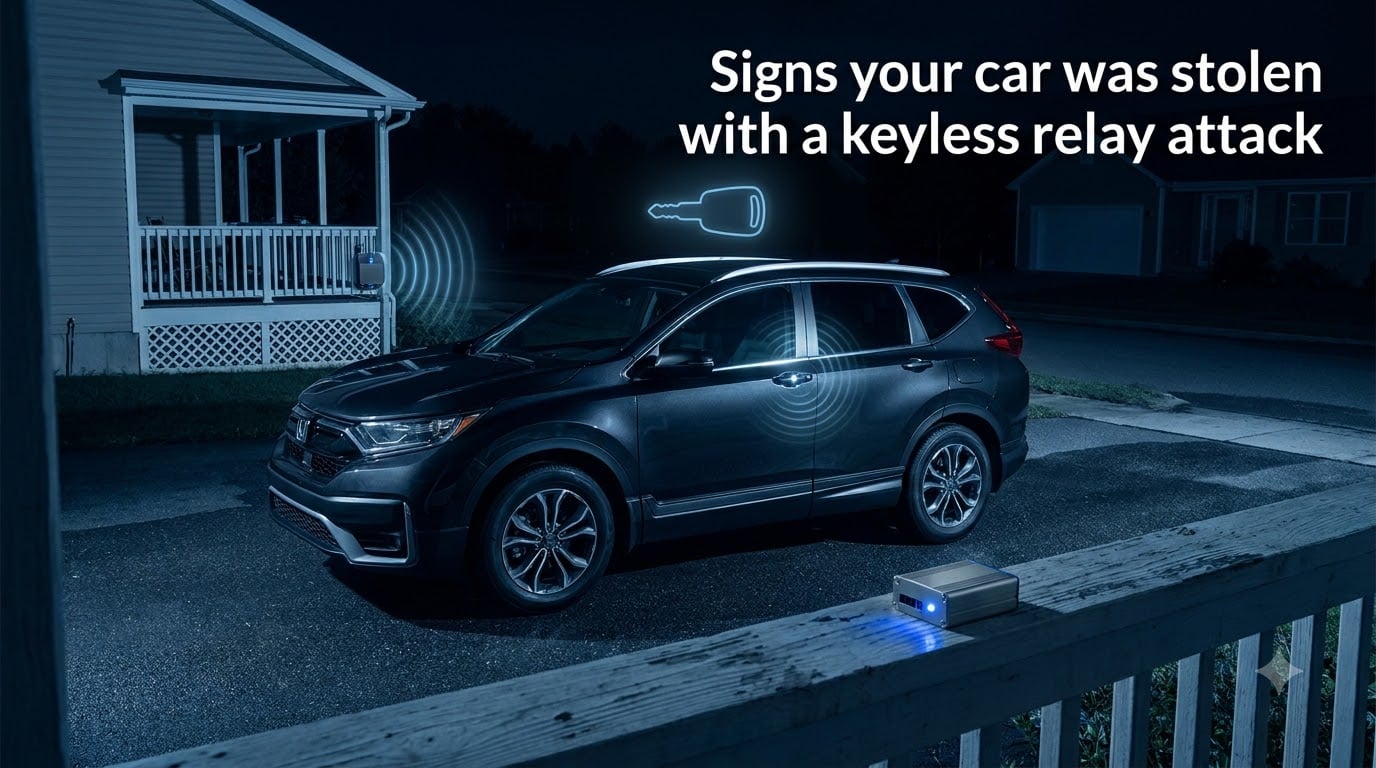
You wake up, walk to the driveway, and your car is gone. No broken window. No scratched ignition cylinder. No alarm blaring through the night. That silence is the signature of a keyless relay attack, and the signs your car was stolen with a keyless relay attack look very different from anything you’d expect.
I dug into this topic after a friend asked me how someone could steal a modern push-button car “without the key.” I spent two weeks reading police reports, ADAC security studies, and hundreds of Reddit threads from real victims. This guide gives you the same picture I now have.
By the end, you’ll know exactly how a relay attack works, the seven warning signs that one happened to your car, which models are most at risk, and what to do in the next 60 minutes if you suspect an attempt.
Table of Contents
- What Is a Keyless Relay Attack?
- How a Keyless Relay Attack Works Step by Step
- Signs Your Car Was Stolen or Targeted With a Keyless Relay Attack
- Which Cars Are Most Vulnerable to Relay Theft?
- What to Do Right After You Suspect a Keyless Relay Attack?
- How to Prevent a Keyless Relay Attack on Your Car?
- Real Victim Experiences: What Keyless Relay Theft Looks Like
- FAQs
- Final Thoughts on Spotting a Keyless Relay Attack
What Is a Keyless Relay Attack?
A keyless relay attack is a type of car theft where criminals use two electronic devices to capture and rebroadcast the signal from your key fob, tricking your vehicle into thinking the real key is present.
Your key fob constantly emits a low-power radio signal, usually on 125 kHz or 315 MHz, that says “I’m here.” When your car detects that signal, it unlocks the doors and lets you press the start button. Thieves figured out how to grab that signal out of the air, amplify it, and send it to the car, even when the key is sitting on your kitchen counter 30 feet away.
Traditional car theft leaves visible damage: a jimmied door, a punched ignition, a smashed window. A relay attack leaves almost nothing. That’s why the signs your car was stolen with a keyless relay attack are so subtle, and why most victims don’t realize what happened until police or insurance investigators confirm it.
How a Keyless Relay Attack Works Step by Step
Every relay attack uses the same basic setup: two people, two devices, and a window of about 30 seconds. Here’s the exact sequence thieves follow.
Step 1: Scout the target. One thief walks down your street at night with a small handheld relay box. They’re looking for cars parked in driveways, especially next to a house with a key fob probably sitting inside.
Step 2: Capture the key signal. Thief A stands near your front door, wall, or window and points a relay receiver at the house. The receiver grabs the faint ping from your key fob and sends it to a transmitter held by Thief B, who is standing next to your car.
Step 3: Relay the signal to the car. The transmitter near the car rebroadcasts the captured signal at full strength. Your car’s antenna picks it up and thinks the key fob is right there. The doors click open.
Step 4: Start the engine and drive away. The thief gets in, presses the start button, and drives off. The whole process takes 15 to 60 seconds. No alarm. No noise. No glass on the ground.
The relay kit itself is shockingly cheap and easy to buy online. Security researchers at ADAC tested 237 cars and managed to unlock every single one using relay devices. That’s why recognizing the signs of a relay attack is so important, because the theft itself is silent, but the aftermath tells a story.
Signs Your Car Was Stolen or Targeted With a Keyless Relay Attack
This is the section most security articles skip, and it’s the one you actually came here for. Here are the seven signs that strongly suggest a keyless relay attack was attempted or completed on your vehicle.
1. No signs of forced entry. Doors are unlocked but windows are intact. The ignition cylinder is undamaged. There are no tool marks on the door frame. If your car was stolen cleanly with no broken glass, that’s a strong indicator of a relay attack.
2. Your key fob is still in the house. You check your coat pocket, your kitchen counter, your nightstand. The key is exactly where you left it. Yet the car is gone. A traditional theft usually means the keys are missing too. A relay attack means the thief never touched them.
3. Unlocked doors or open trunk in the morning. One Reddit user found their boot open with nothing missing. Thieves had used a relay to open the trunk, searched for valuables, and left when they couldn’t start the engine. If you find doors or the trunk popped open overnight without explanation, that’s a red flag.
4. Car moved a short distance. Some victims report finding their car parked on the same street, just a few spots away, or turned around in the driveway. Thieves sometimes test the vehicle, realize it has a tracker, and abandon it close by. A small unexplained position change is a classic sign.
5. Ghost light flashes or lock sounds at night. Several users describe seeing their lights flicker or hearing the locking chirp repeatedly during the night with no key present. This happens when relay devices probe the car’s signal. If you have a dashcam or outdoor camera, check the footage for people standing near the car with bags or boxes.
6. Items inside the car have been disturbed. Glove compartment open, center console ajar, seats adjusted, things moved a few inches. You can’t explain it, but something is off. Thieves often rifle through the interior before driving away.
7. Your key fob battery died unusually fast. If your fob battery drained weeks earlier than expected, your car may have been “woken up” by relay probing days or weeks before the actual theft. It’s rare, but it happens with vulnerable models.
If you notice two or more of these signs together, treat it as a confirmed relay attack attempt. Move to the next section immediately.
Which Cars Are Most Vulnerable to Relay Theft?
Almost every keyless entry and push-to-start car built between 2010 and 2026 is technically vulnerable. Some models, though, are stolen far more often than others because thieves know their relay defenses are weak.
The UK vehicle research group Thatcham rates cars on relay attack resistance. Models that failed their tests included several popular SUVs and sedans from brands like Ford, Toyota, Nissan, and Land Rover. The vehicles stolen most often through relay attacks in recent police reports tend to be high-value crossovers and luxury SUVs, because they’re worth more on the black market.
Three things make your car more attractive to relay thieves:
It’s parked in a driveway or close to an exterior wall, so the key fob signal is easy to grab.
It has keyless entry AND push-to-start, not just remote locking.
It lacks a motion-sensing fob that goes to sleep when stationary.
If your car has all three of those traits, assume you’re a target. The model matters less than the setup.
What to Do Right After You Suspect a Keyless Relay Attack?
Most people panic when they realize their car is gone. The actions you take in the first hour matter for both recovery and your insurance claim. Here’s the exact sequence I recommend.
Step 1: Don’t touch the car or the scene if the car is missing. Walk away and call the police immediately. A non-emergency line is fine. Get a crime reference number. Without it, most insurers will not pay out a theft claim.
Step 2: If the car is still there but signs look suspicious, photograph everything. Capture the open trunk, the unlocked doors, the disturbed interior. Time-stamp the photos. This is the evidence that proves a relay attack to your insurance company.
Step 3: Check your home security footage. Look at doorbell cameras, driveway cameras, and neighbor footage from the night before. Relay thieves often wear hoodies and carry shopping bags to hide the relay boxes. Note the exact times.
Step 4: Call your insurer and report it. Tell them you suspect a keyless relay attack. Mention that no keys were stolen and no damage was done. This framing is important because the investigator will know what to look for.
Step 5: Reset and re-pair your key fob. Your dealership can wipe the current fob from the car’s memory and pair a fresh one. Old fobs that were “captured” by a relay cannot start the car again once reset.
Step 6: Add a tracking device. If your car doesn’t already have one, install a GPS tracker before the next night. Many insurers now require them for theft coverage on high-risk models.
How to Prevent a Keyless Relay Attack on Your Car?
Prevention is cheaper than replacement. These are the seven measures that actually move the needle, based on what locksmiths and security researchers say works.
1. Store keys in a Faraday bag or signal-blocking pouch. A lined metal pouch blocks the fob signal completely. Several models cost less than a tank of gas. Test your bag by trying to unlock the car while the fob is inside it. If the doors stay locked, the bag works.
2. Disable the key fob’s wireless signal when not in use. Many newer fobs have a sleep mode you can toggle in the settings. Some models let you double-press the lock button to disable the signal. Check your owner’s manual for the exact sequence.
3. Keep keys far from exterior walls and doors. If your keys sit on a hook right next to the front door, thieves only need to stand on your porch to grab the signal. Move them to the back of the house or upstairs.
4. Add a physical steering wheel lock. A relay attack can start the engine, but a mechanical lock stops the wheel from turning. Visible locks also deter thieves who scan driveways for easy targets.
5. Park in a garage when possible. A garage adds a wall between your key fob and the thieves’ relay device. Even a thin wall reduces signal strength dramatically.
6. Install an aftermarket immobiliser or ghost tracker. A secondary immobiliser that requires a PIN or button sequence before the engine starts will defeat most relay attacks. Insurance-approved trackers also help with stolen vehicle recovery.
7. Update your car’s software. Manufacturers push security patches through dealerships. Some 2026 models received relay-attack fixes that wake the fob only when it physically moves. Schedule the update if you haven’t yet.
Real Victim Experiences: What Keyless Relay Theft Looks Like
Security advice is useful, but real stories show what actually happens. These are paraphrased from real forum posts reported by owners who lived through a relay attack.
One owner in the UK woke up to find her car missing. No broken window. No alarm. The keys were in her handbag by the bed. Police later confirmed it was a relay theft based on CCTV of two people carrying bags near her driveway at 3:47 a.m.
Another owner found his trunk popped open with nothing stolen. He later realized thieves had used a relay to open the trunk, searched for valuables, found nothing, and left without trying to start the car because it had a secondary immobiliser.
A third driver reported seeing his lights flicker twice at 2 a.m. on his outdoor camera. He thought it was a power glitch until he found the car moved six inches forward in the driveway. Thieves had probed the car, realized it had a tracker, and abandoned the attempt.
These stories line up with the signs above. They also show that prevention works, and that quick action after the first sign of an attempt often saves the car.
FAQs
What is a relay attack in car theft?
A keyless relay attack is a theft technique where criminals use two electronic devices to intercept and amplify the signal from your car’s key fob. The first device captures the signal from inside your home, and the second relays it to the car, tricking it into unlocking and starting without the real key being present.
How do I know if someone tried to steal my car with a relay attack?
The most common signs are a car missing with no broken windows or ignition damage, the keys still inside your home, doors or trunk found open without explanation, lights flickering at night, and the car moved a short distance. These signs together suggest a relay attack rather than a traditional theft.
Can a car with keyless ignition be stolen without the key?
Yes. Any keyless entry car with a push-to-start button can be stolen through a relay attack if the key fob signal is not blocked. The thief never needs to touch the physical key. The attack works by relaying the fob’s signal from inside your home to a device near the car.
Which cars are most vulnerable to relay theft?
High-value SUVs and luxury crossovers with keyless entry and push-to-start are stolen most often. Vehicles parked in driveways close to the house, and fobs that do not have motion-sensing sleep mode, are the highest-risk setups regardless of brand.
How common is keyless relay car theft?
Keyless relay theft now accounts for the majority of modern vehicle thefts in many countries. Security researchers have successfully used relay devices to unlock over 230 tested cars, and police reports in the UK and Europe show relay attacks as the leading method for stolen luxury vehicles.
Does insurance cover a car stolen by relay attack?
Most comprehensive auto policies cover relay theft the same way they cover any theft. The key is reporting a stolen key fob is not required, and your insurance company should treat a relay attack as a non-forced-entry theft. You will need a police crime reference number and clear evidence of the theft.
Final Thoughts on Spotting a Keyless Relay Attack
The signs your car was stolen with a keyless relay attack all come down to one thing: the absence of forced entry. No broken glass, no scratched ignition, no missing keys, just a missing car or a disturbed interior. If that pattern fits what you’re seeing, you’re almost certainly dealing with a relay attack, not a traditional break-in.
Start with the cheapest fix today: a Faraday pouch for your keys and a steering wheel lock for the car. Both cost less than a single tank of gas and stop the most common attack path. If you already suspect an attempt, document the scene, call the police, and contact your insurer before anything else.